
By Tim Hauserman
Sierra Nevada history is full of fascinating characters who’s love of skiing inspired them to take on the difficult challenge of starting a ski area from scratch. One of these is Hannes Schroll: champion ski racer, yodeler extraordinaire, and the determined visionary that created Sugar Bowl.
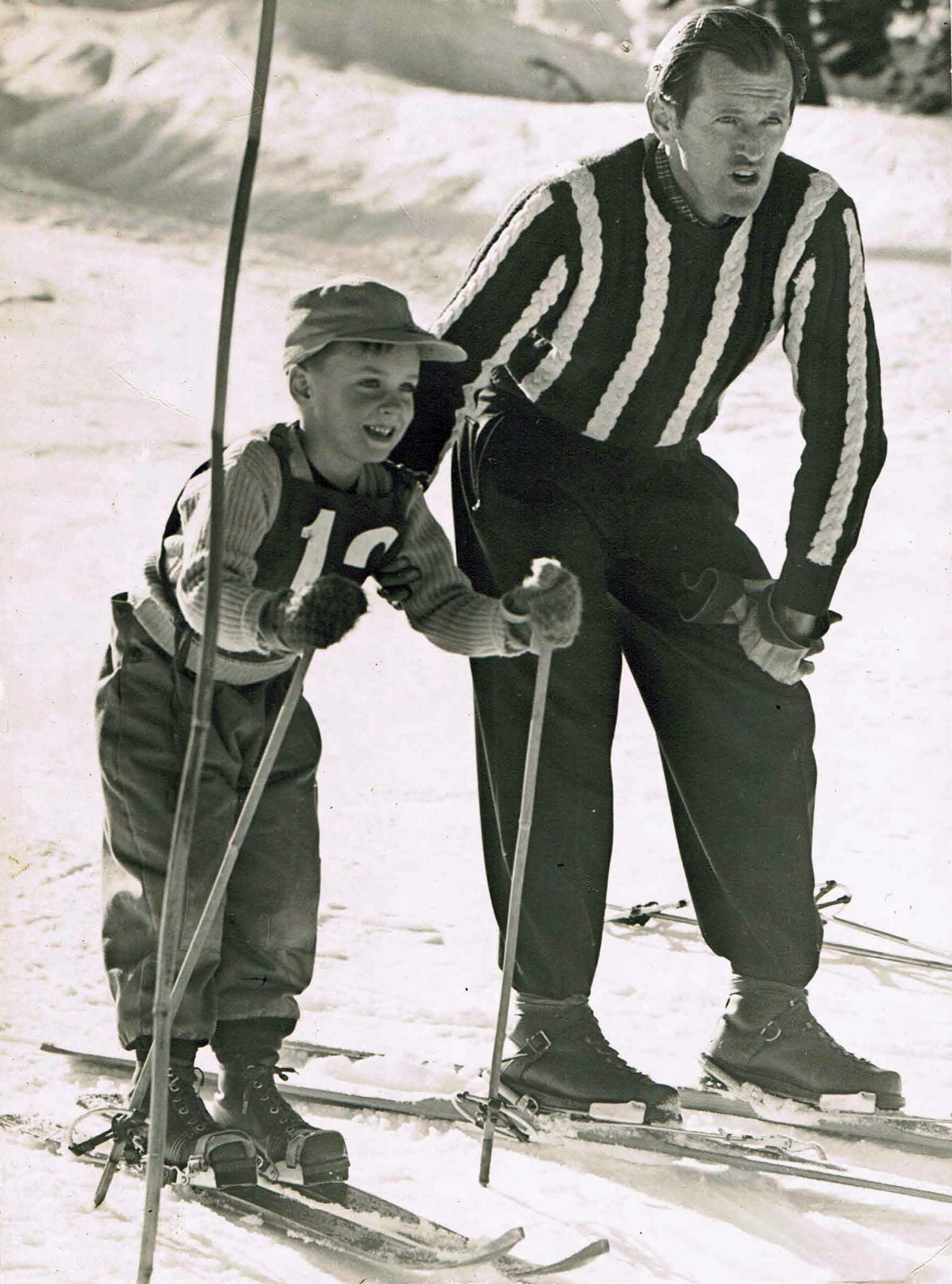
JB McIntosh gets a ski lesson from Hannes Schroll, photo credit: The McIntosh Family
Born in 1909, Schroll grew up near Salzburg, Austria, and began winning ski races on barrel- stave skis in his teens. He won about 100 races in Europe including the Marmolata, the steepest race in the Italian Dolomites. His first place prize was awarded by Benito Mussolini.
Schroll represented Austria at the first FIS race held on the Pacific Coast of the US at Mt. Rainier in April 1935 and as Elissa Hambrecht said in an article for the Donner Summit Historical Society, “in true Austrian style, you could hear Hannes Schroll yodeling before you could see him, given cloudy conditions and poor visibility.” He won the race and began working at Badger Pass as the Ski School Director.
With his Tyrolean hat, racing skills and penchant for yodeling, Schroll became a legend in the 1930s small Sierra ski community. He even participated in one of the famous longboard races put on by the Johnsville Ski Club in 1937. He strapped on 14 foot wooden skis and took on champion longboard racer Johnny Redstreake, who beat Schroll by skiing at over 80 miles per hour. Apparently Redstreake’s “dope,” the wax concoction key to longboard racing success, was superior.
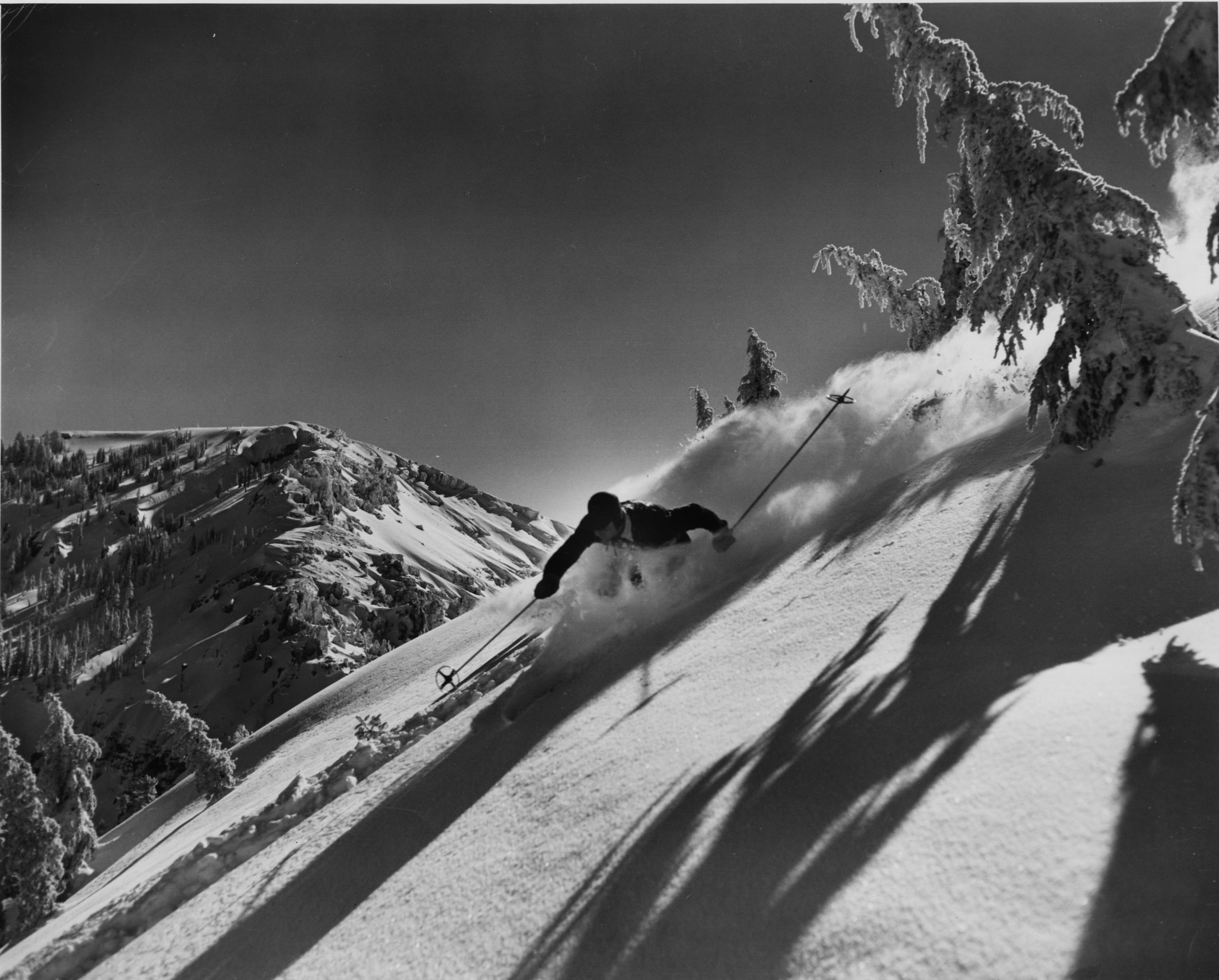
Hannes Schroll Skiing modern day “Nancy’s”, photo credit: Susie Schroll (photo taken by Jerome Hill)
In July 1938, Dr. Otto Berken, an eye surgeon from San Francisco, told Schroll that even this late in the summer there was still lots of snow at the base of Mt. Lincoln on Donner Summit. Soon after Schroll decided that it’s reliable, deep snow and proximity to both a main railroad line and major highway made Donner Summit the perfect place for a ski area. So he left Yosemite, raised the funds from a group of wealthy Bay Area friends and students, and purchased 696 acres from two sisters from Sacramento, and began building a ski area.
“As it is today, the business of running a ski resort is not for the mild of heart. The combination of reliance on Mother Nature and the human condition is daunting and rarely a predictable and dependably profitable business. But Schroll understood that the experience of skiing would build a strong community and knew that he had a group of loyal and capable partners, who also had the means,” said Hambrecht.
The Sugar Bowl lodge was built right at the base of the mountains, and designed to shed snow towards the back, so as not to obstruct the mountain views. In an effort to come up with the funds for the lodge, Schroll went to Los Angeles to find supporters and contacted Walt Disney, who became a financial supporter (He invested just $7500, and Hemlock Hill was renamed Mt. Disney.)
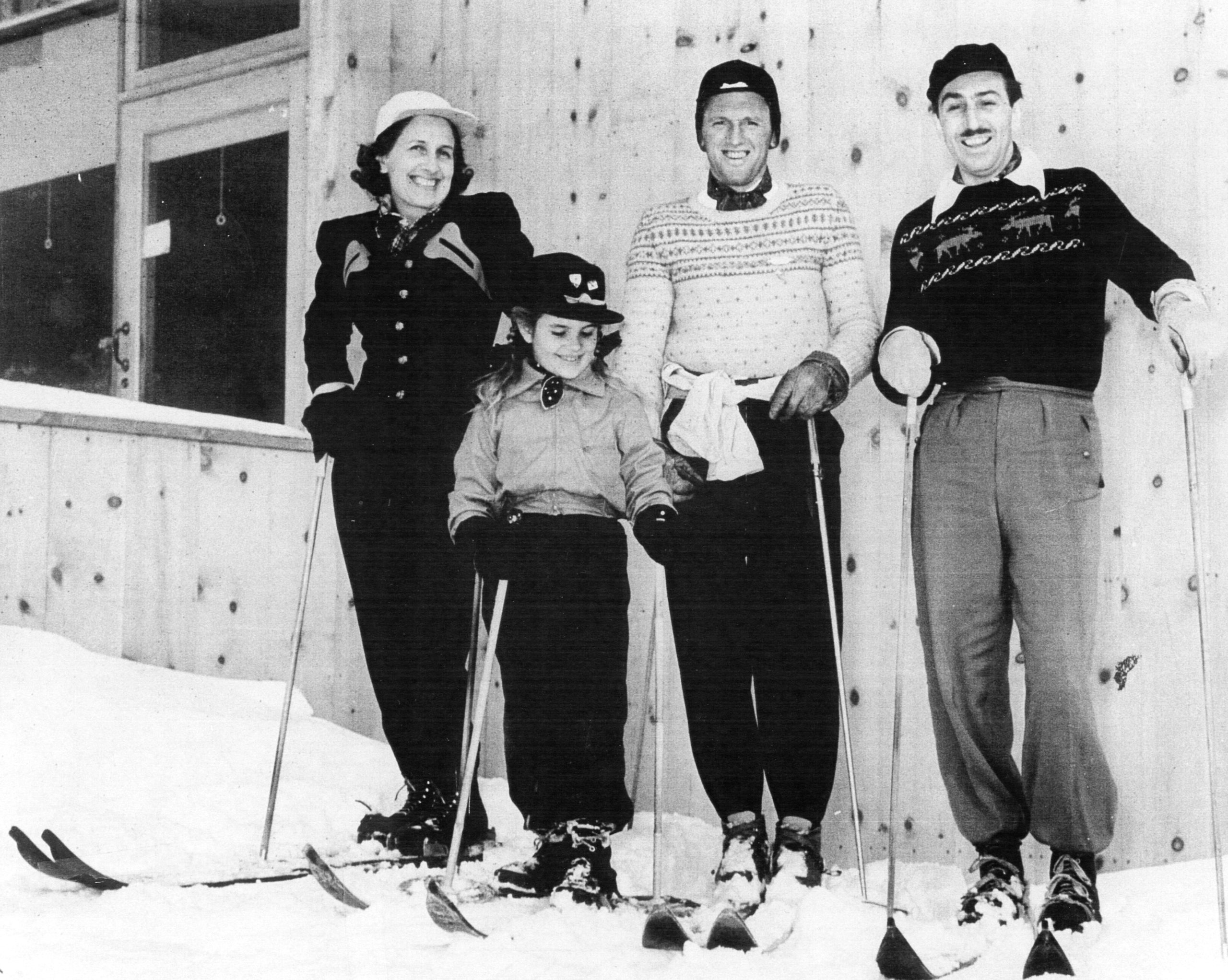
Hannes Schroll and the Disney Family, photo credit: Norm Saylor collection
Schroll married Maud Hill and had two children. Maud was the sister of Jerome Hill who won an Oscar in the 1950s for his documentary Alfred Schweizer. Mr. Hill also completely funded Sugar Bowl’s gondola, California’s first in 1953.
Hannes Schroll was a champion ski racer and a promoter of the sport. It was his determination that made a resort in a remote location come to fruition in 1939. “It was his personal involvement with members of the community, which made skiing fun, fashionable and family friendly. His legacy lives on, 86 years after the resort opened on December 15, 1939,” said Hambrecht .
Thanks Elissa Hambrecht and the Sugar Bowl Historical Society for information included in this story.
Starting now, we will provide a series of stories about what has made Sierra Nevada’s snow sports so fascinating. The goal is for the readers to connect with these stories and understand why it is important that this museum is built. To find out more or to get involved go to thesnowmuseum.org